Empower Family Chiropractic.
Empower Family Chiropractic is a prenatal, pediatric, and family chiropractic practice in Lakeway, Texas, led by Dr. Jeannique Norbert, known as Dr. J. The practice cares for patients from infancy through adulthood, with an emphasis on gentle, individualized care.
Watch the interview.
21 MINUTES
Dr. J shares what nervous-system-focused chiropractic care means at Empower, how she adapts care for babies and pregnant patients, and what families can expect during their first visit.
Inside the interview: Her path to chiropractic · Nervous-system-focused care · Why families seek care · Gentle pediatric and prenatal adjustments · Your first visit · The Webster Technique
Why we selected Empower Family Chiropractic.
We selected Empower Family Chiropractic for its clear focus on prenatal, pediatric, and family care, Dr. J's specialized training, more than a decade in practice, and consistent patient feedback.
Dr. J earned her Doctor of Chiropractic from Texas Chiropractic College, graduating cum laude and as salutatorian of her class. She has also completed extensive specialty training in pediatric care and holds special certificate training in the Webster Technique. At our last verification in August 2026, Empower held a 5.0-star rating across 141 combined Google and Facebook reviews.
BS Microbiology, University of Texas at Austin
ICPA pediatric specialty training · Webster Technique certified
PX Docs network member
From the interview.
Who is Empower Family Chiropractic best for?
Empower Family Chiropractic cares for patients from infancy through adulthood, with a particular focus on babies, children, pregnant women, postpartum mothers, and families seeking age-appropriate chiropractic care.
Adults also visit the practice for concerns such as headaches, neck pain, back pain, pregnancy discomfort, posture, and sports-related issues. Dr. J evaluates each person individually to determine whether chiropractic care is appropriate and may collaborate with or refer patients to other healthcare professionals when needed.

What does nervous-system-focused chiropractic care mean at Empower?
At Empower, nervous-system-focused care means looking beyond the location of pain to understand the broader picture.
Dr. J considers the patient's health history, movement, areas of tension, goals, and how the concern affects daily life. The practice also uses noninvasive scans that record surface temperature patterns and muscle activity as part of its evaluation and progress tracking.
What should you expect during your first visit?
The first visit begins with a detailed conversation about why you are seeking care, what you are already doing, how the concern affects your quality of life, and what you hope to be able to do more comfortably.
A physical evaluation and noninvasive scans may follow. X-rays may be recommended when clinically indicated, but Dr. J does not X-ray pregnant patients and generally does not X-ray babies or very young children. Whether an adjustment takes place during the first appointment depends on the consultation and examination findings.
"The story is what matters," she says. "I want to know exactly what you're here for."
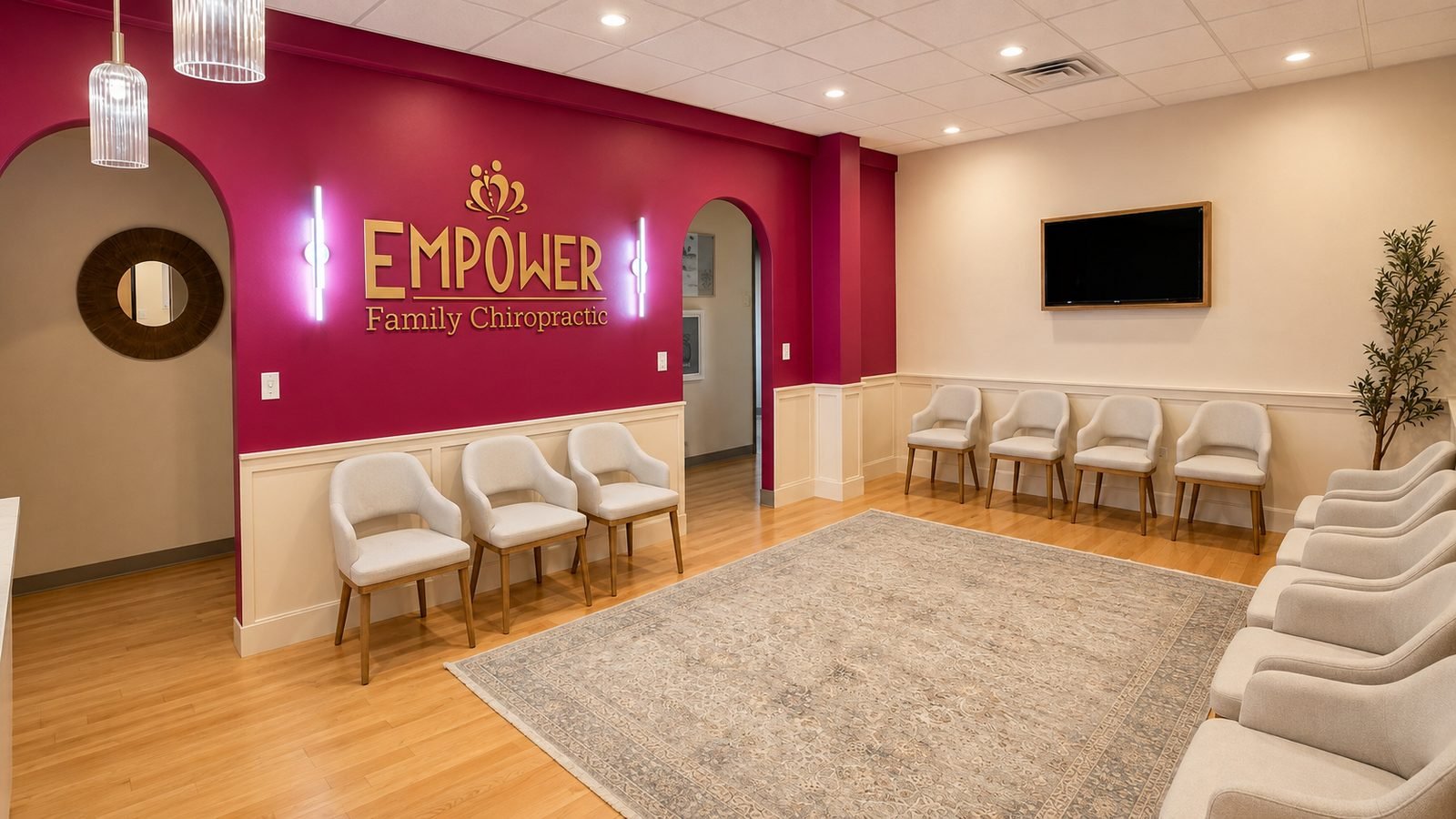
How does Dr. J adapt care for babies, children, and pregnant patients?
Dr. J adjusts the technique, positioning, and amount of pressure based on the patient's age, development, pregnancy, health history, comfort level, and examination findings.
For infants, she uses gentle, specific pressure rather than the force used in an adult adjustment. "You'll never see forceful twisting, turning, or cracking of a baby's neck," she explains.
Pregnant patients are supported with pregnancy pillows and tables designed to keep them comfortable during care.
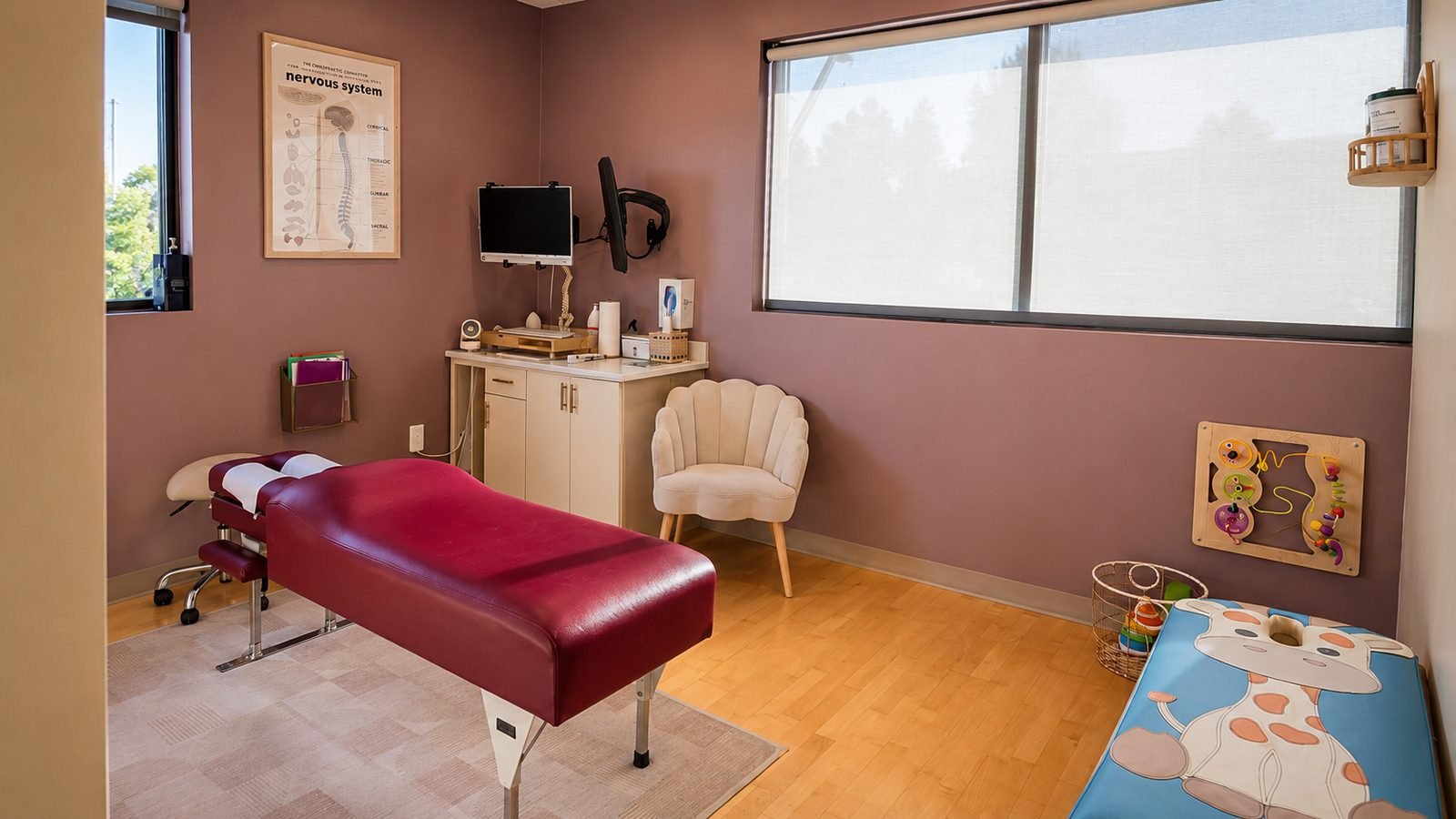
What is the Webster Technique, and does it turn a breech baby?
The Webster Technique is a specific chiropractic analysis and adjustment focused on the sacral and pelvic region. Dr. J holds special certificate training in the technique through the International Chiropractic Pediatric Association.
The technique does not involve manually turning or repositioning a baby. Dr. J works with the pregnant patient's spine, sacrum, pelvis, and surrounding tissues.
"I'm not turning babies," she explains. "We're working with the mother's spine, pelvis, and the tissues."
Watch Dr. J explain the Webster Technique at 18:38 →Photos courtesy of Empower Family Chiropractic.
2951 Ranch Road 620 S, Suite 106, Austin, TX 78738 (Lakeway, behind the Grove)
(512) 956-6970 · empowerfamilychiro.com
Mon 9:30–12:30 & 3–5 · Tue 3–5 · Wed 9:30–12:30 & 3–5 · Thu 9:30–12:30
Read the full interview transcript
Misty Gibbs: Welcome to the Best of Local where we help you meet experts before you book. I'm excited to have Dr. J with Empower Family Chiropractic on today. She is located on 620 in Lakeway, Texas right behind the Grove. Thank you, Dr. J, for joining me today.
Dr. Jeannique Norbert: Yeah, thank you. I'm glad to be here.
Misty Gibbs: Well, I know you're super passionate about what you do. So we'd love to hear your story about how you started into the pediatric chiropractic care.
Dr. Jeannique Norbert: Yeah, so simply put, I've actually been going to the chiropractor since I was about 12 years old. the journey in chiropractic started for me as a child as a child, right? And so I was similar to a lot of families. My family didn't really actually know chiropractic was an option for them to help me deal with I had debilitating migraines. That's where it started. it was a lunch and learn, honestly, that happened at my dad's office that they even learned that that chiropractic for kids was an option. though they didn't know a whole lot about chiropractic at that time, it just naturally,
Misty Gibbs: really.
Dr. Jeannique Norbert: as it does for most, they were just thinking about it for adults. And when it was introduced as like, hey, kids can get adjusted too I think I'm so grateful that my parents were open to the idea. That was the changing point for me in my personal journey. Journey as a child. So later on, as my journey continued and I decided to decide what kind of doctor I wanted to be, chiropractic continued to be a part of my life. It was just the moment that I realized: wait, that's this is the kind of doctor. It was just like a regular thing. It was a regular it is a specialty within chiropractic, but primarily, you know, just with my own personal experience, both with how chiropractic helped me, but also realizing because it was such a natural part of my routine that my parents incorporated, I felt like how cool would it be really again to be able to now in this season of my career, be able to make sure people know that they have options. And honestly, that is why I loved the name Empower. It's all about do families know what options they have for their health or wellness? And yes, there's a niche within pediatric care that a lot of people don't know about. that's
Misty Gibbs: No, that's awesome. I love the tie-in too with your with your name. So one thing too I want to say, you've done an amazing job with just making your office so welcoming and inviting. I'm sure the kids really appreciate, a great experience for them I'm sure there's a lot of different, feelings going to the office. So you do an amazing job just with the experience of it.
Dr. Jeannique Norbert: Thank you. because we see all of whole families or age ranges, really wanted to make sure that yes, kids realized they felt like it was a place for them, by seeing kids around and also that others coming in, moms, dads, folks who from whatever walk of life, there is also that comfort of knowing like, hey, This is is the place right for and separation if needed from Yeah, that's something we paid attention to.
Misty Gibbs: For everybody. Absolutely. So I know that at Empower Family Chiropractic, you describe your business, really your focus as a nervous system focused practice. So, you know, tell us more about what that means and why the nervous system matters for a person's overall health, development. ability to adapt to stress, which there's ton of today. So tell us more about that.
Dr. Jeannique Norbert: Yeah, absolutely. So yeah, you are correct. like I mentioned with my own personal story, when people hear about chiropractic or they say that you say you're a chiropractor, they often ride away, they jump to, my neck hurts, my back hurts, and let me call the chiropractor. First thing I wanna say is yes, absolutely call the chiropractor for that, right? while we're absolutely caring for people experiencing pain, because that's a matter of quality of life, right? And look those looking for natural, not short-term options, but a longer term option our focus is to go deeper than that, right? like to say it's not because it's just a preference of wanting to talk about nervous
Misty Gibbs: Quick fix. Mm-hmm.
Dr. Jeannique Norbert: system. do we understand that that we need to go deeper than just the pain, right? and that's really an educational piece or lesson that I think not just in my office, but a lot of folks are realizing like I can't just like put a band aid on the pain.
Misty Gibbs: Mm-hmm. Absolutely.
Dr. Jeannique Norbert: Yeah, there's a reason my body is doing this, right?
Misty Gibbs: understand the root of what's going on.
Dr. Jeannique Norbert: Exactly, So in that conversation, I feel like more and more individuals are realizing this root cause conversation. The nervous system, it's the communication system, right? Between the brain and the body. So I always say I like to I like to simplify a very overcomplicated concept because there's simplicity. There's simplicity that lives within that. And I like for folks to help understand how chiropractic, the chiropractic adjustment supports that. But it does. It helps our nervous system is what's helping us coordinate movement. it's what lets us even feel pain, balance, digestion, sleep, the stress response, right? Whether that's a physical, ow, my back hurts, or wow, I can't sleep and I can't focus, right? development when we're talking about children and overall the way that our body is adapting to everything around around us through the autonomic nervous system. So this isn't an anatomy call today, but I but you know I these are the things I like to dive in with with my patients because life does place stress on all of us, whether we're again busy moms, you know, over the last 10 years serving the community, the last six, I've become a mom myself and it has really catapulted me even deeper in my mission to support women's health Health mother, you know, because it's like you can't change the variables of some of the stress sometimes. Like to say hashtag mom life.
Misty Gibbs: Right. Well, and you can speak to it. I mean, I know you're a new new mom of now you have three, but I think it's probably amazing that these moms come in and like you're a mom yourself and you're juggling a lot of things. So when you're talking about nervous system, like you're in it. So you can really relate. Yes.
Dr. Jeannique Norbert: it. I'm with you. I'm with you. I'm literally with you. So yes, yeah. as it spans for children, it can begin in pregnancy. That's why to me, this this pediatric prenatal conversation, we can start from the beginning, right? As far as where stress starts for all of us in our nervous system, or where we can catapult with great support from the time we're in our mother's womb and even preconception health. But kids continue to grow, they fall, they're doing sports, they get sick, they have screen time, and it places demands on our body our physical body and then the nervous system and then of course for adults where there's pregnancy we're parenting we're working we have poor posture sitting at desks we have injuries and just simply carrying the weight of a busy life. So ultimately our goal is to identify those Areas of dysfunction and tension within the spine. The spine is what is actually physically protecting the nervous system. So that's simplicity and the complexity I like to give. And misalignments, poor movement. by saying we're nervous system focused, we're not just saying it, our technology in our office. We're measuring it. We can literally measure thermography, electrical impulses to the muscles, all non-invasively. we're able to actually give answers if someone's been told hey your nervous system is dysregulated and not adapting well so we can measure that see see how we be very specific with your chiropractic care the adjustments and your care plans better movement in the spine yes creates better adaptability and we don't have to guess and as to what role we're able to do again, non-invasively, to remove the stress off of the nervous system. So that way when you are exercising or you're doing different things to change your eating habits, your sleep patterns, that you actually have this nervous system that is again open from optimize
Misty Gibbs: Mm-hmm. Optimized. Right.
Dr. Jeannique Norbert: this body to brain communication highway. So when we talk about root cause, I like to show my patient family like this pyramid so that they understand the unique specific role chiropractic plays with getting your spine assessed adjusted how is the stress of the spine literally impacting the nervous system where do i need to adjust then we can actually check in and see how have we changed adaptability here that's gonna be able to help your body function from a stronger foundation structurally And neurologically, because that's what it is. Structure meets nervous system function. And I like to bring that to life in our conversation before we even start to scan so that we can understand the cues and the symptoms coming back what is the body already showing you. So I don't promise that chiropractic care cures every symptom because we're not there to cure a symptom. but there are a lot of things that we're able to support and see happen and be able to speak actually very confidently and not like I don't know maybe it helped but more like absolutely
Misty Gibbs: Mm-hmm. what are some examples of, why people are coming in, why moms are coming in themselves or they're bringing in their infants? I know you also serve, adults. So just give us examples of why people are coming in these days.
Dr. Jeannique Norbert: we have plenty of patients very very much dealing with headaches. Like I said, that was my d my my foot in the door as well. And that's why I never wanna create even confusion, like yes, headaches, neck pain, back pain, pregnancy discomfort. sports related concerns, right? this is how we're able to address these things without pain medications without bringing together the conversation of why movement and exercise maybe if you're already seeing a physical therapist why is this a must? Because we are dressing the way muscles are firing the way the structure is aligned to optimize. but families they're also especially these days they're coming and looking at bigger picture, we have very specific phone calls or things that start to come about in our conversation when even if the conversation started with back pain, we are talking about digestive health. My office, we are part of a community of doctors we're all in our individual practices, but based off how we train, what we're able to provide, like I said, with the services. we're called PX docs. I wanted to just bring that up because a lot of families are calling because they found us for a pediatric experience where we're more neurologically focused offices. So we've got very specific phone calls that don't start. with back pain they start with let's say my nerve my body's in fight or flight or I've been told my vagus nerve is dysregulated because say for kiddos let me go to specific they're noticing there's some tension in the baby maybe after prank after birth baby might be preferencing one side it's they're having difficulty being comfortable they're colicky challenges in their mode or development because this is the conversation happening in other places too sometimes parents like well I didn't know or I or I was told I can call a chiropractor to talk about this and they know about our focus and again they seek care for themselves or their child if they're having difficulty adapting to stress, maintaining good posture or recovery their health ailments. So women's health has become very specific too. as far as navigating both pregnancy, premenopause, because of how that relates to the other things that come with that. hormones, right? Again, not
Misty Gibbs: Yeah. You're covering the you're covering from the beginning to the to the end. which is awesome because then you understand the whole picture. I think what is important and missing a lot of times when we go to the doctors is there isn't that whole picture assessment. I just want to say really quickly, I'm glad you mentioned, what are some of the signals that for in babies that you need to look for because little babies can't talk, you know, and you just don't know. I'm glad that you walked through what are some things that you need to look for that maybe would be a good time to come in and see if your services, could help. So I know chiropractic care is people do get nervous, especially if you're pregnant and, talking about your your baby and everything. So talk about how you approach the gentle adjustments and how how that works and how you, help patients work through, this level of care.
Dr. Jeannique Norbert: Yeah. I'll start off by saying we collaborate with other professionals because now over the years there's referrals being made, right? By pediatricians, by OBs, lactation consultants, these days airway specialists as well. and again, sometimes it might be confusing. Well, why are they referring or nervousness around going to the chiropractor for this. So the first thing I like to say is that chiropractic care doesn't look exactly the same for every single person.
Misty Gibbs: Mm-hmm. Mm-hmm.
Dr. Jeannique Norbert: we are living in I like to say the TikTok era where you if you never went to the chiropractor now there's all kinds of stuff all over the place and you might put in their mind like wow that's how they're gonna adjust my newborn or my year old or you know or I'm a grown man and even that looks scary to me. Right. So the so I like to say you know the technique positioning the amount of pressure that we use it's adapted to the specific patient's age there's different again developmental phases that because as being yes a certified pediatric chiropractor I'm aware of that even though all chiropractors were essentially trained to work on children as long as you've got a spine we're trained to work with you it doesn't work that way though in and there when working with pediatrics and prenatal with children and peds again and pregnant women and so for example with infants i like for folks to know that the adjustments they're very gentle they're specific it's it's it's almost so anticlimactic when you see it because their bones are they're literally cartilage right and so it's like a pressure that is being used to apply. Now I'm speaking to the technique because ultimately over the years that's what I'll hear as far as people being nervous about so we're not using the same force that you'd use with an adult. And you'll never see forceful twisting, turning, cracking of a baby's neck. That's just not even appropriate. developmentally appropriate. Now for children and adults, same thing. There are different techniques that I'm able to use that yes, involve the understanding and knowing what other health reasons why I can or can't do certain techniques. So people are like, are you ever nervous? I'm like, well, there are risks involved with every single healthcare provider you go to. I want to be very candid about that. Thankfully in chiropractic, we do a lot of people don't know. We have the lowest malpractice insurance of all health providers because the risk is so minimum, but you still have to pay attention. And because of the thoroughness of the evaluation that I do, there are contraindications that I identified that would allow me to know a If there is a certain technique, you know, I'm not gonna do that because I took your x-rays and I can see you have a stress fracture. You know, because I do, I take x-rays. I assess the health
Misty Gibbs: Thank you. Right.
Dr. Jeannique Norbert: of the spine, understand your clinical history.
Misty Gibbs: maybe that's a good interesting just to add in there, like when people are going to you for the first time, like what can they expect? like you're saying is you are doing the evaluations x-rays before you kind of jump into the adjustment.
Dr. Jeannique Norbert: yeah, so what to expect? And I have to give the disclaimer, I do not x-ray pregnant women. we only begin x-raying children at about five to six, right, when the spine when the chain the compensations and their health really start to set in. neurological scans on the initial visit though with everyone, because those do not emit radiation, that they're emit They're picking up on energy on patterns that the body is giving off. So there's nothing going in. that is a regular part of our initial exam that we perform. So yeah, on day one, it starts with the consultation. Again, we spend quite a bit of time actually on day one. We take a deep dive. I wanna understand I wanna get on on your level, right? I wanna see what you're already doing and what exactly you're here for before we start talking about anything else, right?
Misty Gibbs: Exactly. And that is awesome. We appreciate you for that. That does not happen everywhere. So
Dr. Jeannique Norbert: I yeah, I don't want to tell you all the stuff you didn't know you were here for. I want to know exactly what you're here for. And I want to anchor it to your quality quality of life. the conversation starting at pain is okay. It's fine because that is what is affecting your quality of life. And there are other things that we get a chance to talk about and discover, whether it's in that initial visit, after we take your scans, your x-rays if indicated, I do the assessment. but I say the story is what matters. I start to put together patterns that even
Misty Gibbs: Mm-hmm. Mm-hmm.
Dr. Jeannique Norbert: you didn't know were related. And by the way, neither did your other provider because I'm trying to see the big picture. Other things will unfold. but again, I want to know exactly why you I spend most of the time on that initial visit, in that conversation, understanding your goals and then what those issues are doing to affect your quality of life. And the goals are actually not based off of just pain scales or now you're a five out of ten instead of a ten out of ten. I'm talking about, you said you wanted to, you know, be able to pick up your kiddo or you wanted to. to be able to not snap at your children I wanna anchor what those issues are to your quality life. so that's where everything starts. You get to meet our awesome team at the front, the initial
Misty Gibbs: Mm-hmm. You have a great team, yeah.
Dr. Jeannique Norbert: Thank you. Thank you. We take those scans. Again, we take the at the digital x-rays. Those are on site. So you don't have to go off anywhere to do those. and then you get to chat with me and you know, we'll go as surface level or as deep as you're comfortable with, but I'll ask you some different questions that you're not used to talking about at a chiropractor. Cause before we can start talking about your baby. Yes, I'm gonna ask you about the birth story a little bit and your pregnancy.
Misty Gibbs: Mm-hmm. No, absolutely. That makes sense. this has been amazing. Is there anything else that you feel like most people don't know about that you would love to share more?
Dr. Jeannique Norbert: Well, one thing that is special to us, I want to pull folks to understand how we are different in the community. We have a lot of great chiropractors in the Lake Travis community. A lot of us know each other and root each other on. And we all understand too that we have certain specialties and niches. we spoke about pregnancy or pediatrics, but with the with pregnancy, I am both specialty certified in the Webster Technique. I want to make sure everyone understands that. Whether you know what the Webster technique is or not, if you are pregnant, you want to get yourself to a Webster chiropractor who can support you with the Webster technique. This is a specific assessment and adjustment that focuses on the pelvis, the sacrum, And it helps support the surrounding ligaments of the uterus. simply put, with pregnant women, I also have the pillows, the tables appropriately for you to actually safely lay down and be and adjusted. also to the providers that send folks to the chiropractor looking for Webster Techniques certified chiropractors, we're able to support proper space. Space for the baby in the womb. So a lot of folks know hey, if my baby's not in the proper position. Webster technique, I'm not turning babies. I like to make that clear. It's not a manual manipulation of a baby. We're working with mother's spine, pelvis, again, the tissues to release tension that's actually hindering on baby space. So mom's comfortable, baby's comfortable, and you know, I'm trained in that clinical decision making the technique and I like to have fun but it's not just fun it's serious I'm a mom too so I give a lot of mom hacks pregnancy hacks that support day-to-day life yeah yeah
Misty Gibbs: Which I'm sure they're thankful for. You can't have enough hacks, that's for sure.
Dr. Jeannique Norbert: A lot and providers that support them in their prenatal journey because of this prenatal world that I am in. so mothers can really feel safe. you're feeling informed, you're respected through the different stage or what whether you're hospital birth, home birth, birthing center, whatever. I'm here to support you and your baby in that way, very specifically with the prenatal care that you get here and the Webster technique. yeah, that's one of the things I wanna make sure no one forgets about.
Misty Gibbs: Yeah, and I'm glad you went through that. well we appreciate the work that you do in the community and and everything.
Dr. Jeannique Norbert: Thank you, Miss C. I really appreciate it.
Misty Gibbs: All right, bye.
Transcript lightly edited for clarity.
Every business featured on The Best of Local is chosen by our editorial team. How businesses are selected →